


What Does Glutathione Do in the Body?

Updated: Mar 10
Glutathione is often described as the body’s most important intracellular antioxidant. Found in almost every cell, this naturally occurring molecule plays a critical role in protecting cells from damage, supporting detoxification pathways, and maintaining normal immune function.
Because of its central role in cellular health, glutathione has become an area of growing scientific interest. In this article, we explore what glutathione does in the body, how it works at a biochemical level, and why maintaining adequate glutathione levels is important for normal physiological function.
What Is Glutathione?
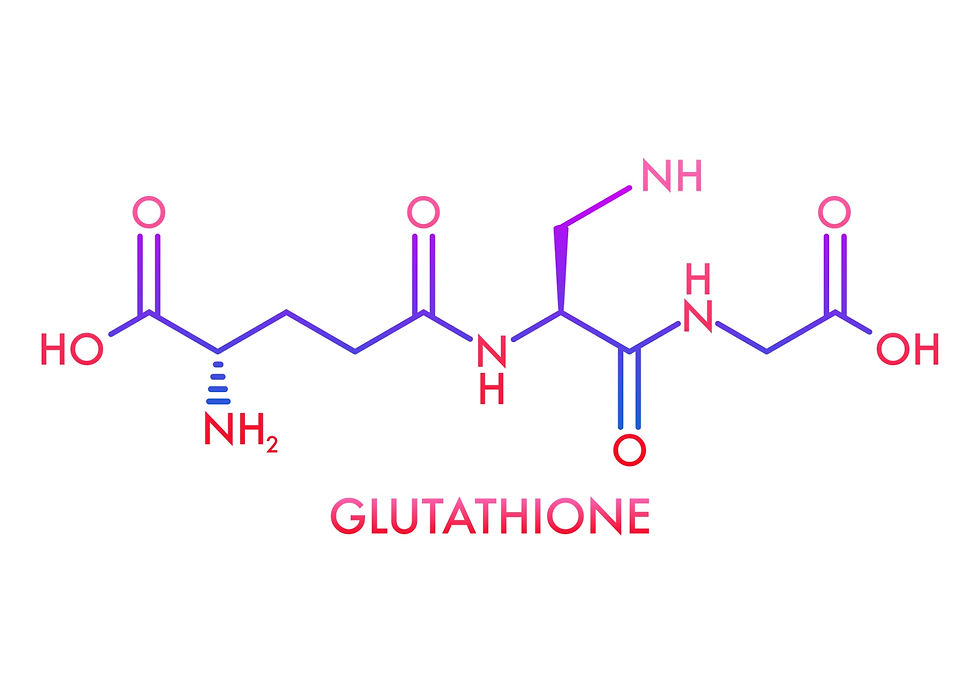
Glutathione is a small peptide molecule composed of three amino acids:
Glutamate
Cysteine
Glycine
It is synthesised within cells through enzymatic reactions and exists primarily in two forms:
Reduced glutathione (GSH) – the active antioxidant form
Oxidised glutathione (GSSG) – formed after neutralising free radicals
The balance between these two forms helps regulate cellular redox status, which is essential for maintaining healthy cell function.
Glutathione is present at particularly high concentrations in the liver, lungs, brain, and immune cells, where protection against oxidative stress is especially important.
Research has shown that glutathione plays a key role in multiple biological processes that support cellular stability and metabolic function.(Wu et al., 2004, PubMed)
Glutathione and Oxidative Stress
One of glutathione’s most important functions is protecting cells from oxidative stress.
During normal metabolism, cells produce molecules called reactive oxygen species (ROS). While small amounts of ROS are involved in cellular signalling, excessive amounts can damage cellular structures including:
DNA
Proteins
Lipid membranes
Glutathione neutralises these molecules by donating electrons, effectively stabilising reactive compounds before they can cause cellular damage.
This antioxidant activity is crucial for maintaining cellular integrity and metabolic balance.
Scientific studies have highlighted glutathione as a major component of the body's antioxidant defence system.(Forman et al., 2009, PubMed)
Glutathione and Liver Detoxification
The liver relies heavily on glutathione as part of its detoxification processes.
Detoxification occurs in several stages, and glutathione is involved in phase II detoxification, where enzymes known as glutathione S-transferases (GSTs) attach glutathione to potentially harmful compounds.
This process helps convert substances into forms that can be eliminated through bile or urine.
Compounds processed in this way include:
Environmental toxins
Drug metabolites
Oxidised cellular by-products
Because of this mechanism, glutathione is considered essential for maintaining the body’s natural detoxification pathways.(Hayes et al., 2005, PubMed)
Glutathione and Immune System Function
Glutathione also plays an important role in regulating immune responses.
Adequate intracellular glutathione levels are required for the proper functioning of immune cells, including:
T cells
Natural killer cells
Macrophages
These cells rely on balanced redox conditions to function effectively.
Research suggests glutathione helps regulate immune signalling pathways and inflammatory responses, contributing to normal immune system activity.(Ghezzi, 2011, PubMed)
Glutathione and Mitochondrial Health
Mitochondria are responsible for producing energy within cells. However, energy production naturally generates reactive oxygen species.
Glutathione helps maintain mitochondrial redox balance, protecting these structures from oxidative damage.
Healthy mitochondrial function is essential for cellular metabolism, energy production, and overall cellular health.
Studies have shown that disruptions in glutathione levels can affect mitochondrial stability and cellular resilience to stress.(Ballatori et al., 2009, PubMed)
Why Glutathione Levels Can Change
Although the body produces glutathione naturally, levels may vary depending on factors such as:
Age
Nutritional status
Chronic stress
Environmental exposures
Certain health conditions
Research suggests that glutathione levels may decline with age, which may affect cellular antioxidant capacity.(Pizzorno, 2014, PubMed)
Because of this, scientists have explored various ways to support glutathione availability.
Glutathione Injections and Clinical Use
Glutathione can be administered through several routes, including:
Oral supplementation
Intravenous infusion
Intramuscular injection
Injections deliver glutathione directly into the body and bypass digestion.
In clinical settings, glutathione injections are typically provided following medical consultation and assessment of suitability.
Glutathione Injections at Our Clinic
At our clinic, glutathione injections are provided as part of a clinically supervised service.
Before treatment, patients undergo a consultation to review their medical history and determine whether treatment is appropriate.
Our focus is on providing treatments that are:
Evidence-informed
Delivered safely by trained professionals
Supported by clear patient education
If you would like to learn more about glutathione injections, our clinical team can explain the treatment process and answer any questions you may have.

Comments